

Summary
Sunshine Coast Health Cardiology team conducted a quality improvement study in an Australian cardiology inpatient unit.
Everyday patients across Australia remain in hospital beds longer than clinically necessary; not because the patients require ongoing acute care, but because historically cardiology units have delayed discharges which creates a ripple effect in the health care system. Late discharges in cardiology inpatient units contribute to patient flow inefficiencies and poor patient outcomes including reduce bed availability, contribute to overcrowding, increase health costs and delay access to other cardiac services to other patients.
To tackle this, the Sunshine Coast Health Cardiology team conducted a quality improvement study in an Australian cardiology inpatient unit over the course of 12 months, aiming to reduce the frequency of late discharges (those after 12pm).
Discharge times were calculated over 1 month to identify causes of delays, then new departmental policies were created and implemented to improve discharge times, using the plan-do-check-act framework.
By analysing baseline discharge data, the team identified several common causes of delay, including late ward rounds, paperwork bottlenecks, and waiting on specialist reviews.
Using the Plan–Do–Check–Act (PDCA) framework, the team implemented targeted interventions to address these issues. These included:
- Standardising ward round start times
- Strengthening discharge planning processes
- Empowering junior clinicians to initiate discharges
These changes delivered strong and sustained improvements:
- A reduction of 87 minutes in median discharge time within one month
- An 80-minute reduction maintained at six months
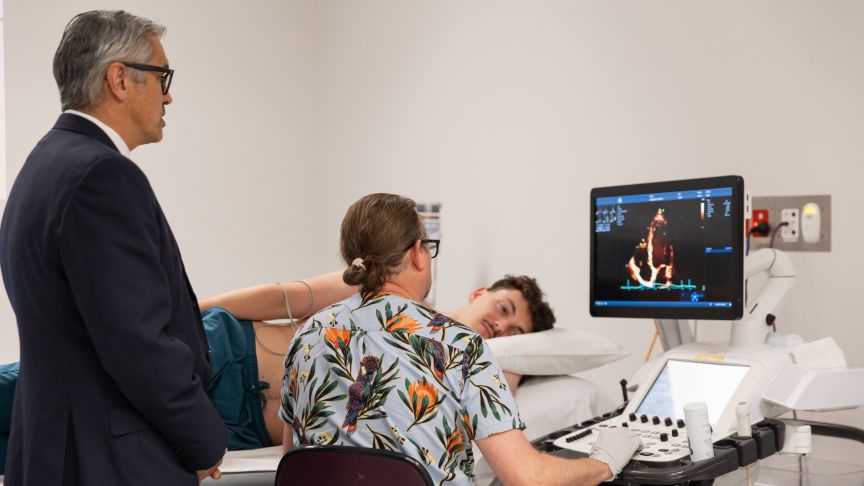
Professor Kim Greaves, Sunshine Coast Health Co-Director of Cardiology and Griffith University conjoint clinical research leader, mentored Dr Eddy Xiong as first author on the research paper. "Congratulations to Eddy Xiong and the team on the acceptance of this work in the British Journal of Healthcare Management. This project highlights how focused, practical interventions can meaningfully improve discharge efficiency in a busy cardiology service. It’s particularly rewarding to see Eddy drive this work during his medical training as a student at Griffith University. This is an excellent example of student-clinician-led quality improvement translating into real-world impact."
At Sunshine Coast Health Institute (SCHI), we are true believers in mentoring junior researchers to create better research integrity and strong researcher retention. There are benefits across all who are involved. For junior researchers, it allows expanding on skills like granting writing, advancing in their careers all the while mentor creates a sense of belonging and guidance. It also allows for fresh perspectives for the mentor to engage with new methodologies and ideas. You could say, everyone wins.
Dr Eddy Xiong was grateful for the opportunity to be mentored by Professor Greaves and have the support of multidisciplinary team. "Many thanks to the medical and nursing teams in the department for assisting with data collection and implementation, as well as to the team at SCHI who were excellent in providing support with data analysis and scientific writing."
Congratulations to everyone involved. This research truly shows how practical, team-driven changes can make a real difference by improving efficiency and patient flow even in the busiest hospital environments. Read more about the research publication here.