

Summary
Sunshine Coast Health Institute set to improve understanding of cancer with new lab device.
Thank-you to generous donations from Wishlist’s Spring Carnival, we have been able to increase Sunshine Coast Health Institute's (SCHI) laboratory capabilities with the introduction of the 10X Genomics Chromium iX. Keeping important health care and research close to home.
While the equipment looks simple, the Chromium iX is cutting-edge technology that allows scientists to analyse diseases like cancer, liver disease, inflammation, immune profiling and biomarker discovery at the level of individual cells.
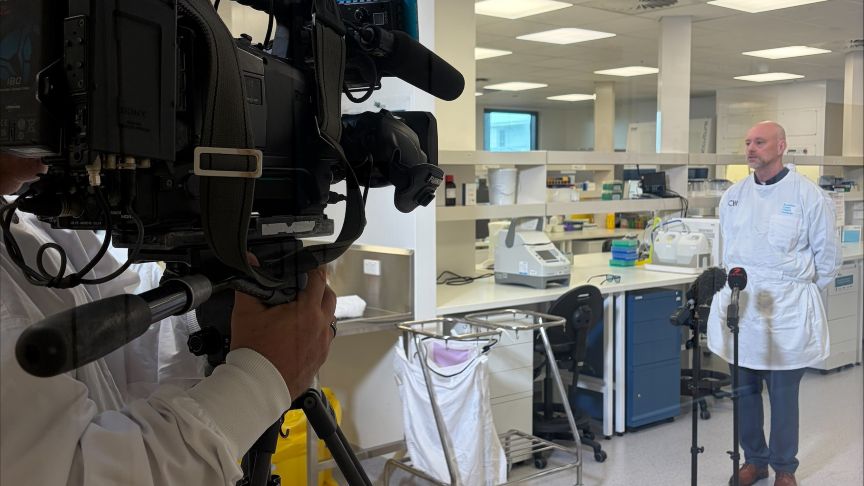
SCHI Lab Operations Manager Barry Pritchard said this sort of technology shows that biomarkers can detect cancer much quicker which means patient treatments can be modified and improve patient outcomes. The technology is expected to accelerate the development of more precise diagnostics and targeted therapies.
“It can help pinpoint what exact cells are driving what diseases. You can't just say you've got cancer - they're all very different - so this gives us insight into treating it at that cellular level - this supports the tailored treatment of patients.”
This will be a game changer not for just Sunshine Coast but globally to improve the understanding of cancer. Starting with the Liver. Professor James O’Beirne, Sunshine Coast Health Senior Specialist in Hepatology explains, “It will help me understand why some of my patients develop liver cancer in the first place, why some of them occur after treatment, and who is going to respond to treatment.”
To help launch this exciting new piece of lab equipment SCHI and our partners had a fantastic opportunity to see the cutting-edge capabilities of the Chromium iX. Huge thanks to Dr. Geoff McDermott (10x Genomics) and Dr. Lochie Fennell (UniSC) for training our research partners on this powerful technology.
This research capability places SCHI in a strong position to advance personalised medicine and deliver tangible benefits for patients as well strengthen SCHI’s ability to support translational research.